

.svg)
MCPs vs. people intelligence: Why access isn't enough for trustworthy AI recruiting

September 23, 2026

Why access alone does not make recruiting output trustworthy
A recruiter asks an AI client to pull candidates from an ATS and an external source. The client returns a large candidate set and a proposed shortlist within minutes. The recruiter still has to determine whether each recommendation reflects the role, whether the candidate information is current, and whether the underlying evidence supports outreach or advancement.
Is having an MCP connection enough to trust AI-generated hiring or talent output? No. A connection can give an AI client access to approved data and tools. Trust also depends on labeled people data, a defined method, evidence, permissions, auditability, and human review.
What recruiters need is stronger signals, more defensible shortlists, and clear control over what happens next — faster access to weak recommendations doesn't get them there. The workflow improves when teams can inspect why someone fits, where each claim came from, and which rules shaped the recommendation.
What an MCP enables in recruiting
Model Context Protocol (MCP) is an open standard that lets an AI tool connect to external data and software. It creates a standard connection through which the AI tool can request available information or call permitted tools.
What is an MCP (Model Context Protocol) and how does it apply to recruiting or HR? In recruiting, an MCP can connect an AI client to systems that hold candidate, employee, requisition, or workflow information. The connection governs access. It does not establish whether the information is accurate, relevant, well labeled, or sufficient for a talent decision.
MCP is a connection standard, not a hiring method
An MCP defines how an AI tool interacts with an external system. Depending on what the connected system exposes, the AI tool could retrieve permitted candidate records, obtain requisition details, or call an available workflow tool.
The protocol does not validate a candidate claim or define the criteria for a role. It also does not label experience, establish the meaning of career evidence, or approve an employment decision. Those responsibilities sit in the data, method, workflow design, and human review around the connection.
Implementations also differ. A team should inspect the specific server, connected system, available tools, and permission model rather than assume every MCP connection supports the same controls.
What AI clients can do after they connect
An AI client can use connected information to respond to a recruiter request. For example, it could retrieve candidates that the recruiter has permission to view, collect relevant requisition information, and return a summary for review. If the connection exposes tools, the client could also request a permitted workflow action.
Permission-scoped MCP access can restrict an AI agent to information the underlying user can see in an ATS, HRIS, or another enterprise system. The existing role-based access model remains the primary control in that design.
That inheritance is useful, but it covers only access. The team still needs to determine which data the client receives, how the system interprets it, what actions it can request, and what a recruiter must approve.
People intelligence is the trust layer behind the connection
People intelligence combines trusted, labeled people data with context about skills, career experience, scope, outcomes, tenure, company trajectory, and relevant relationships. It helps a recruiting team understand how experience could translate to a role.
Generic database access returns records that match available fields. People intelligence gives those records meaning by connecting role criteria to evidence. Titles show where someone has worked. Context shows how their experience may translate.
From profiles to evidence-backed context
Findem is the AI infrastructure for people-centric work. It continuously enriches candidate profiles across ATS, CRM, and external sources with verified career context, including scope, outcomes, tenure, and company trajectory.
Findem also supports searches based on growth patterns and experience, such as work on a 0→1 product build or leadership under pressure. These signals help recruiters look beyond titles and keyword overlap.
Consider an illustrative search for a product leader. A title-based retrieval could return everyone with "Vice President of Product" in a profile. A context-based recommendation could focus on people whose evidence shows that they built an early product function, worked through a period of rapid company growth, and led at the scope defined in the role intake.
The example does not establish that any candidate will succeed. It shows how labeled context can make a recommendation easier to inspect and challenge.
What a recruiter needs to see before acting
A trustworthy recommendation should expose the role-relevant signals, evidence behind each claim, data provenance, applicable rules, and uncertainty that needs investigation. The recruiter should be able to trace the recommendation back to the criteria in the role intake.
Findem's unified platform combines structured, labeled 3D data with explainable signals to support talent decisions. Findem applies 75 to 100 labeled signals to each talent profile. That figure describes the depth of available context, not a guarantee that a recommendation is correct.
Before acting, a recruiter should be able to answer:
- Which experience or signal relates to the role requirement?
- What evidence supports that signal?
- Where did the supporting information originate?
- How current is the information?
- Which company-specific criteria or rules influenced the recommendation?
- What remains uncertain or requires direct validation?
A recommendation becomes useful when the recruiter can examine its basis. Access alone cannot supply that assurance.
Agentic recruiting agents and AI assistants do different work
An AI recruiting assistant responds to a recruiter request. It can retrieve information, summarize supplied material, or prepare a draft when prompted.
An agentic recruiting agent works toward a defined goal through a connected sequence of permitted steps. It can use context and available tools to decide what step comes next within the workflow's permissions and guardrails.
The difference is autonomy over the next step
What are agentic AI recruiting agents and how do they differ from AI recruiting assistants? The practical difference is who determines the next action. A recruiter directs an assistant one request at a time. An agent works through multiple connected actions toward an assigned objective.
Agentic AI in recruiting can carry context across a sequence and take permitted actions as the work develops. A copilot remains the interface through which a person requests work, while agentic capability controls how the system pursues the goal.
Findem's agents plan, execute, and refine multi-step workflows, including workflows intended to deliver interview-ready candidates. Each workflow still requires defined criteria, permission boundaries, review points, and escalation rules.
Keep people in control of consequential decisions
Workflow autonomy must stay within explicit permissions and guardrails. A system can prepare work, move through approved operational steps, and surface a recommendation. Recruiters and hiring teams retain authority over candidate advancement and employment decisions.
Agent output is a recommendation reviewed by a person. Findem does not make employment decisions. Findem emphasizes explainable, role-aware automation in which people retain oversight and final decision authority over talent outcomes.
Human control also requires more than a final approval button. Recruiters need enough evidence to identify incorrect assumptions, incomplete data, unsuitable criteria, and workflow actions that require escalation.
A trust checklist for MCP-enabled recruiting workflows
Defensibility starts with reviewable evidence, controlled permissions, and a record of what occurred. Before an MCP-enabled workflow can source, screen, contact, prioritize, or schedule candidates, the team should define what the system can inspect and do.
MCP alone does not establish whether data is labeled, whether the workflow applied a defined method, or whether someone checked the conclusion against evidence. The following framework turns those questions into operational controls.
Data and context
Start by documenting every connected source and data category. Confirm which candidate, employee, requisition, and workflow fields the AI can access. The team should also determine whether the data is current enough for its intended use.
When the workflow surfaces a candidate, a recruiter should be able to inspect the relevant experience, supporting signals, source context, and connection to the role criteria. Labels should have clear meanings, especially when they encode company-specific concepts such as operating scope or required experience.
Role criteria need the same discipline. Document how the system translates an intake or hiring-manager request into criteria, which criteria are required, and which allow recruiter judgment.
Controls and accountability
Permissions should cover both data and actions. A workflow that can read candidate information has a different risk profile from one that can send outreach or schedule an interview.
Audit records should show the inputs, criteria, sources, actions, approvals, and material changes in the workflow. Privacy controls should govern data exposure, retention, user access, and handling of sensitive information under the organization's applicable rules.
Escalation rules should tell the system when to stop. Examples include missing evidence, conflicting records, unclear permissions, an excluded candidate population, or an action outside the approved workflow.
Approval points by workflow
Information retrieval can use a lighter review point when the output remains internal and read-only. The recruiter should still confirm that the query, access scope, and returned information match the task.
Shortlist creation requires review of the criteria and evidence for each recommended candidate. Candidate advancement requires an explicit decision from the recruiter or hiring team.
Outreach needs approval rules for the recipient set, message content, timing, personalization, and exclusions. Scheduling should follow an approved advancement decision and established rules for participants, availability, and exceptions.
No action is universally safe to automate. The appropriate approval point depends on data sensitivity, candidate impact, workflow scope, company policy, and applicable legal requirements.
MCP and agentic recruiting platform comparison
Which recruiting or talent intelligence platforms offer an MCP for use inside AI clients like Claude? Vendor descriptions provide a starting point, but they do not establish equivalent access, data quality, workflow autonomy, evidence, or governance.
What vendor-reported capabilities indicate
Juicebox describes itself as an "AI recruiting platform" that learns a company's talent bar to help source better hires faster. Its website links to Juicebox Agents and provides free-trial and demo calls to action. These statements do not establish MCP availability, agent behavior, evidence standards, or governance controls.
Pin's website lists its MCP Server alongside sourcing, outreach, and scheduling capabilities. It also advertises free access with 50 sourced candidates per month, no credit card, no trial, and full product access. These are vendor-reported claims and do not, by themselves, describe the evidence or human controls behind the workflow.
How does Findem's approach to MCP and agentic AI compare to Juicebox, SeekOut, and Gem? Findem states how its MCP deployment, labeled people data, explainable signals, agents, and review model work together. The available facts here support narrower statements for the other platforms, so the comparison should not extend beyond them.
Use the trust checklist to evaluate every connected workflow. The meaningful question is what context, evidence, permissions, audit records, and human controls sit behind the vendor's stated capability.
How Findem puts people intelligence to work through MCPs and agents
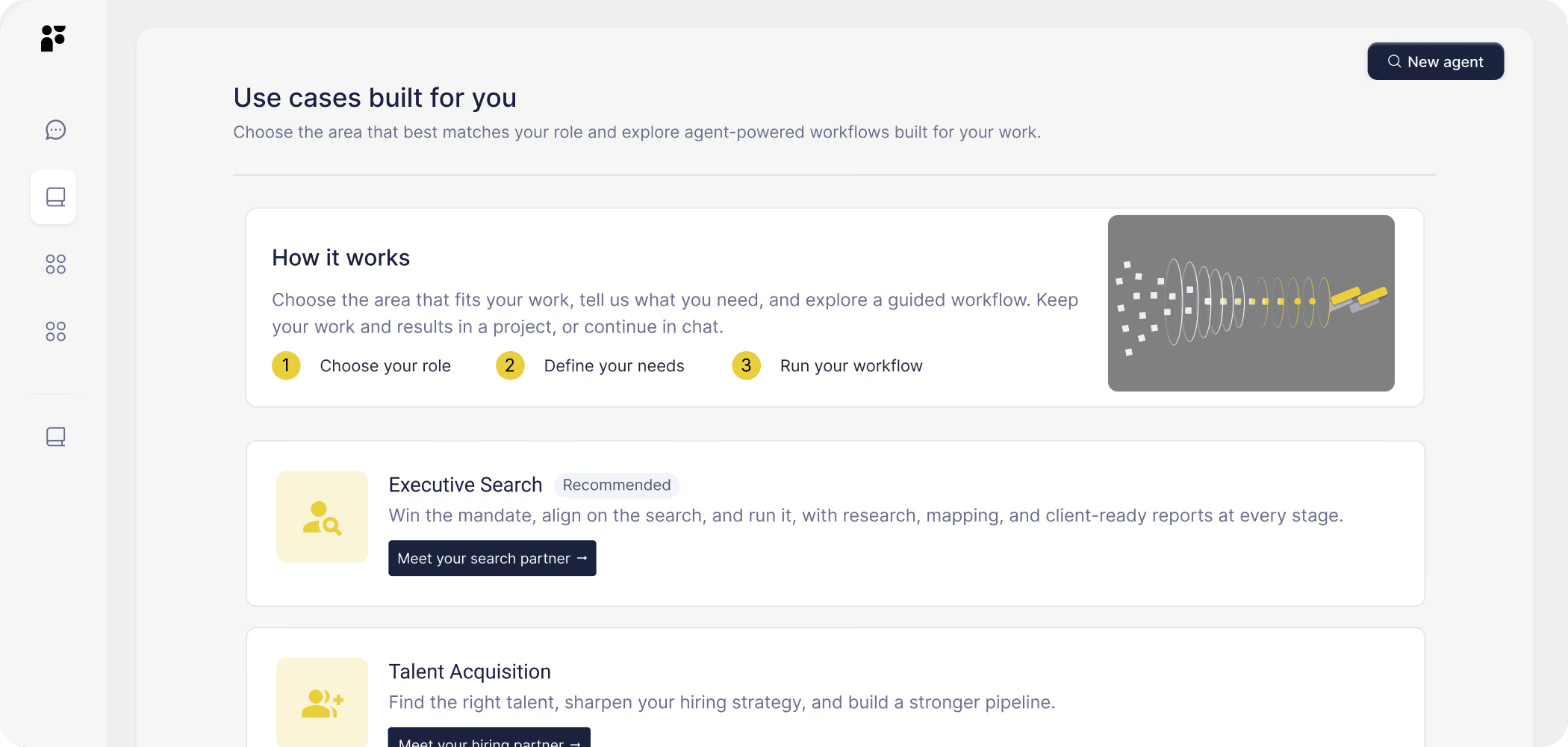
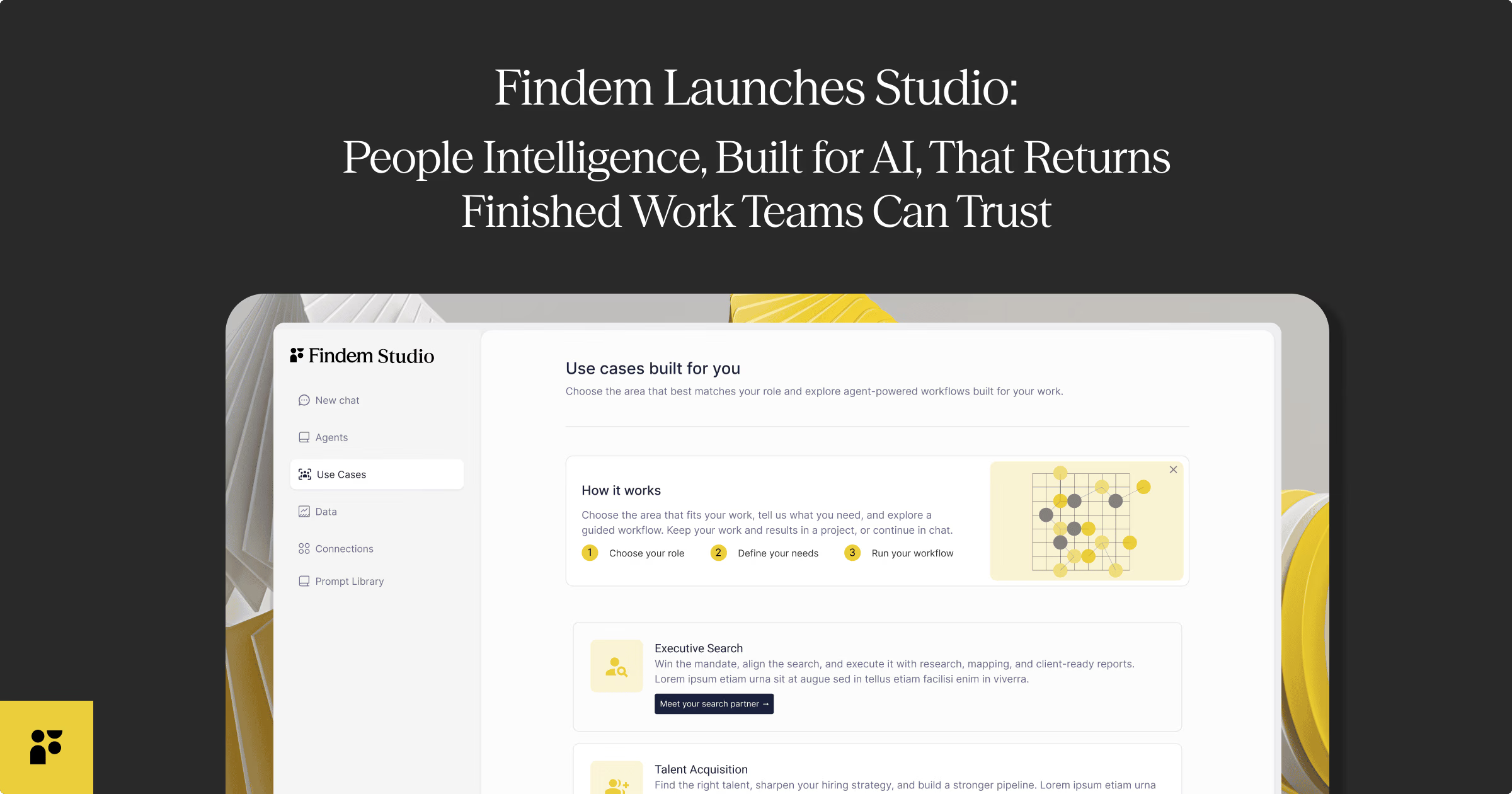
Findem Studio is people intelligence, built for AI. Its purpose is to turn people intelligence into finished work users can trust, such as a market map, role intake, benchmark, succession plan, or reviewed shortlist.
The distinction matters because a connected interface is not the final recruiting artifact. A useful artifact shows its methodology, labeled evidence, review status, and relationship to the business question.
Finished work users can trust
A market map should show the defined market, relevant experiences, and evidence used to include each person. A role intake should convert hiring-team requirements into reviewable criteria. A shortlist should show why each candidate fits those criteria and where a recruiter needs to investigate further.
Findem Studio can deploy MCPs, agents, and workflows within ATS, VMS, payroll/EOR, HRIS/CRM, internal copilots, and other products. This model brings people intelligence into the systems where teams already work while preserving the need for explicit permissions and review.
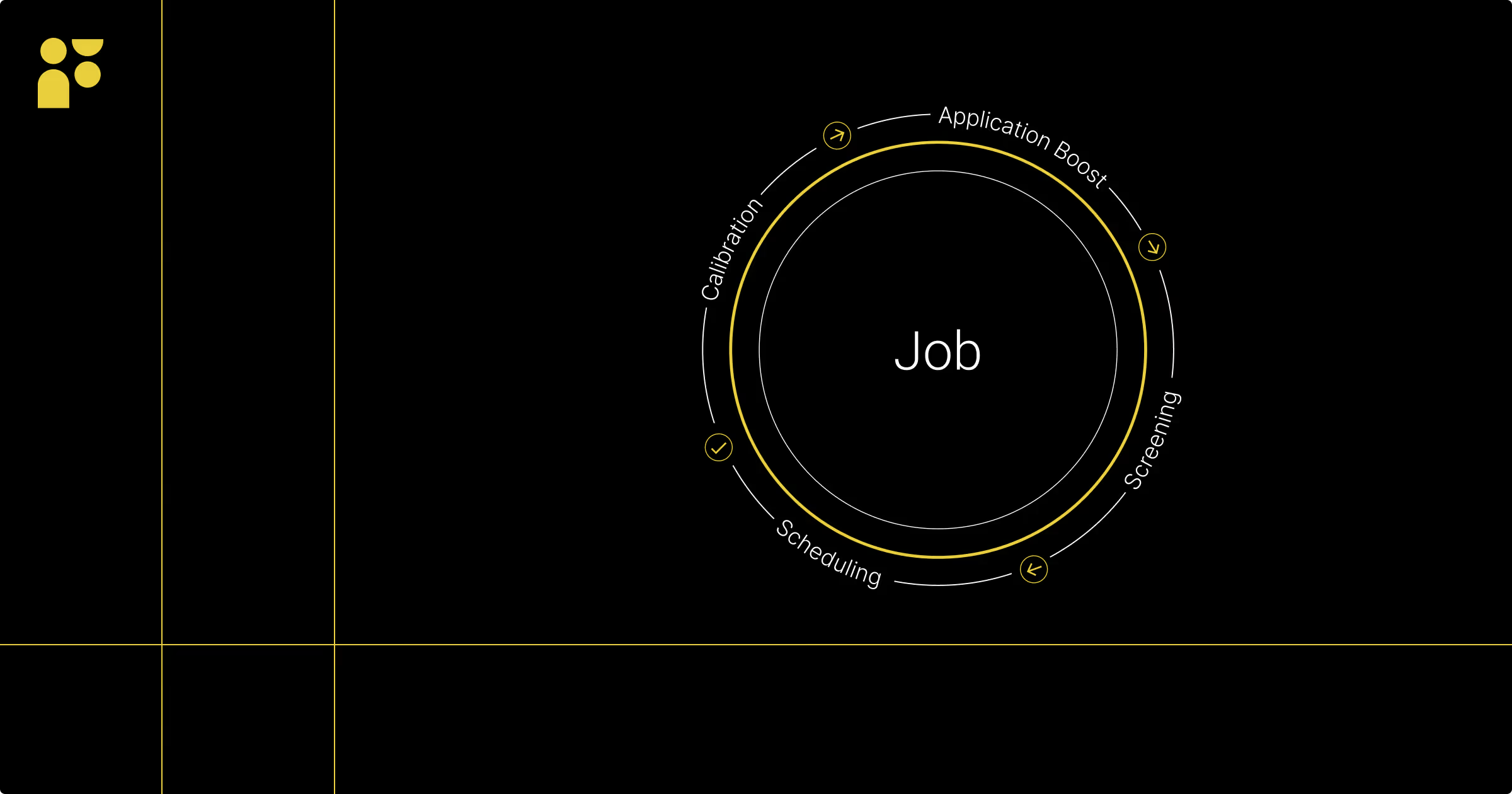
Findem's agentic ecosystem is a network of agents that collaborate through shared context, signals, rules, and objectives across sourcing, engagement, screening, and scheduling. The shared context helps connected steps apply the same approved role definition instead of treating each task as an isolated prompt.
Findem's Platform uses a time-ordered data layer with more than 1 trillion person and company data points, which supports multidimensional talent searches. Scale expands the available context, while labels, methodology, evidence, and review determine whether an output is ready to use.
Company-specific context without giving up oversight
Findem's Data Labeling Engine lets companies structure their own data and build custom agents that encode company-specific signals and internal playbooks. This helps teams define what relevant experience means for their roles and apply that definition more consistently.
The company-specific method should remain inspectable. Recruiters need to know which signals the workflow used, how those signals relate to the role, and what source evidence supports each conclusion.
Agent output is a recommendation, reviewed by a person. Human review confirms whether the output fits the req, identifies evidence that needs validation, and determines whether the team should contact or advance a candidate.
Findem helps teams narrow the field with stronger context while keeping judgment with the people making the decision. That combination supports less manual review without shifting employment decisions to the system.
Choose the workflow before you choose the connection
Start with one bounded recruiting workflow where the output is easy to review. A context-rich shortlist or outreach prepared for approval gives the team a defined artifact, named reviewer, and clear point at which work must stop.
Use this decision path:
- Identify the recruiting workflow and the specific outcome it should produce.
- Define the role-relevant evidence that a recruiter must see.
- Set the MCP's data permissions and permitted workflow actions.
- Establish human review, approval, exception, and escalation points.
- Confirm that audit records can reconstruct inputs, methods, actions, and approvals.
- Evaluate whether the available people intelligence supports a defensible output.
Treat the MCP as a route into the workflow. Judge the workflow by the context, evidence, permissions, auditability, and human judgment around it. Choose a first use case only after you can name who reviews the output, what they inspect, and which actions require approval.
Frequently asked questions
Can an MCP connection preserve existing ATS or HRIS permissions?
Yes, a permission-scoped connection can limit the AI client to information the underlying user can access. The team still needs to configure and test the connection, confirm tool permissions, and govern any actions the workflow can take.
What is a practical first MCP-enabled workflow for a recruiting team?
Start with a bounded, reviewable artifact such as a context-rich shortlist for one req or outreach drafts for an approved candidate set. Require a recruiter to inspect the evidence and approve the next action before the workflow contacts or advances anyone.


